Adding a mamad (safe room) to your home
Moriah Veg plans the mamad, prepares the file for the right permit route, and designs it as a room you will use every day.
To add a mamad (ממ"ד, a residential protected space) to an existing home in Israel, you need plans that meet the Home Front Command's standard and the right permit route. During the war, Israel's National Council for Planning and Building widened a fast-track route and, for some homes, an exemption from a building permit.
The permit routes, in plain English
The National Council for Planning and Building approved a temporary order with two tracks for protected spaces:
| Track | Who it is for |
|---|---|
| Expedited licensing | Adding a mamad, or several, built in a continuous vertical line up from ground level |
| Permit exemption | One mamad per housing unit in low-rise construction, or for a ground-attached home |
| Regular permit | Anything outside those tracks |
“Against the backdrop of the state of war in Israel, the National Council for Planning and Building approved, as a temporary order, the expansion of the regulations for the construction of protected spaces through an expedited licensing process and through a building permit exemption process.”
These rules are temporary and change. Moriah checks which track your home fits before any drawing starts.
What adding a mamad costs
- Plans and permit: 15,000 to 25,000 shekels at market prices, including VAT (Midrag architect price guide).
- Building it: depends on the structure, access and whether it is a single home or a whole building. Get a contractor's priced bill of quantities.
Houses and apartments are different
- A private or ground-attached house: usually the simplest case, often on the exemption track.
- An apartment building: safe rooms are usually added as a vertical stack serving several flats, so it becomes a building-wide project.
What makes a room a mamad
A mamad is built with reinforced concrete walls and ceiling, a blast-resistant steel door and a steel window shutter, to the Home Front Command's standard. Unlike a public shelter (מקלט, miklat), it is inside your own home.
Building starts only from approved plans, and the Home Front Command approval is part of the permit file.
A mamad you will actually use
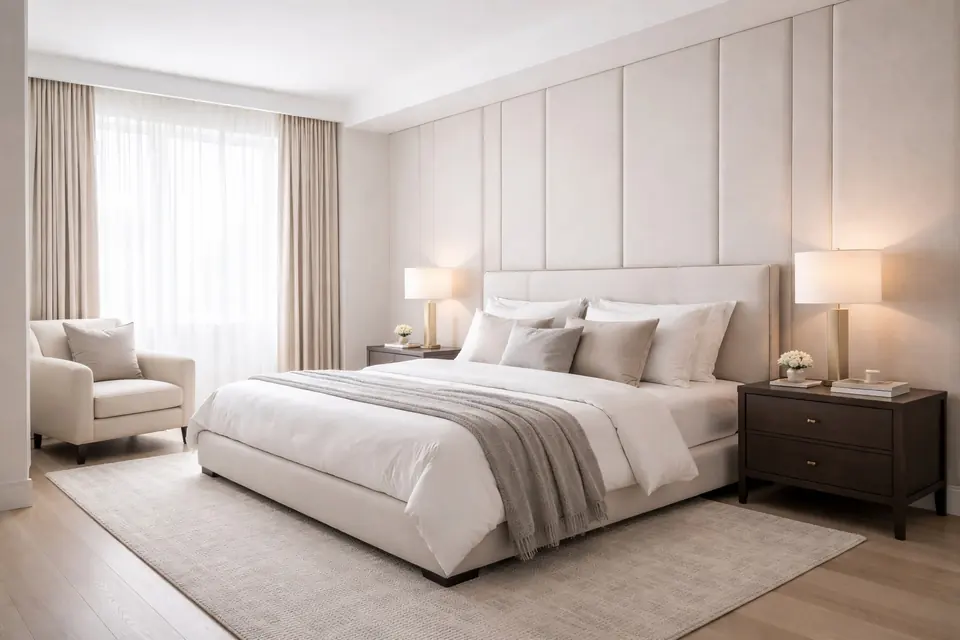
In many homes the mamad is also a bedroom, a study or a guest room. Moriah plans the door, the window, the light and the storage so it reads as a room, not a bunker.
Questions about adding a mamad
Does every home qualify for the exemption?
No. The exemption track covers one mamad per unit in low-rise construction or a ground-attached home. Other homes go through the expedited or regular route.
Who checks the plans?
The Home Front Command sets the protection standard. The studio prepares the plans for that standard and the permit route.
Back to architect and permits in Israel.