Changes to a new‑build apartment in Israel
Moriah Veg redesigns your new apartment's layout, kitchen and electrical points in 3D, so the changes go to the developer before the deadline.
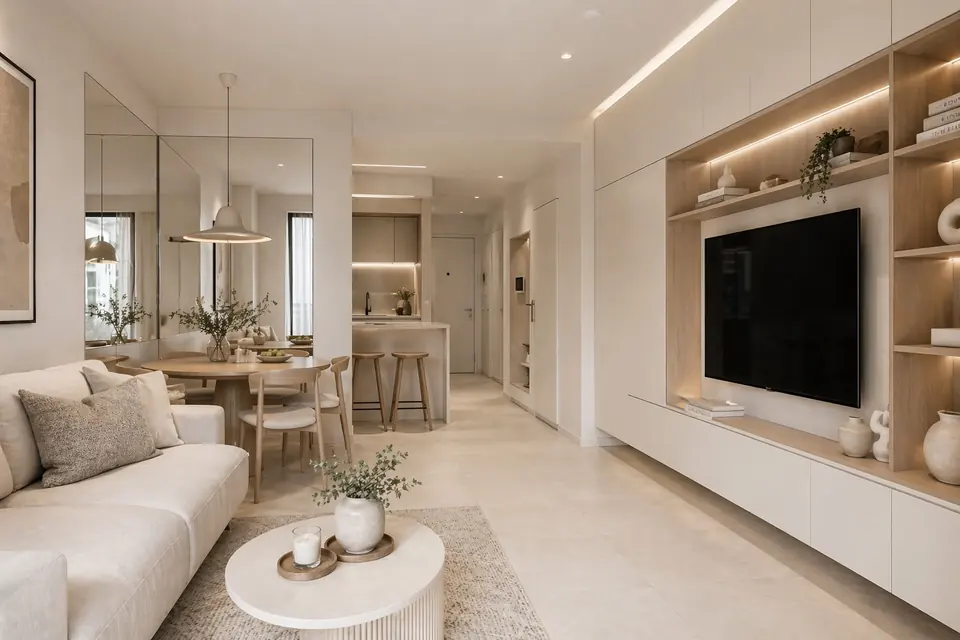
When you buy a new apartment on paper (off plan), the developer (the קבלן, kablan) builds to a standard plan unless you ask for changes in time. Moriah Veg designs those changes, known in Hebrew as שינויי דיירים (shinuyei dayarim, tenant changes), and turns them into plans the developer can build.
The window is real but limited. Changes after the walls and pipes go in cost far more, if the developer allows them at all.
What you can usually change
- Moving or removing interior walls, where the structure allows
- Electrical points: sockets, lights, switches, and outlets for a Shabbat plata or urn
- The kitchen layout and where the plumbing points sit
- Bathroom fittings and tiles from the developer's options
- Removing an item from the specification for a credit
Every developer sets its own options, prices and dates. They are in your contract and its specification.
What Israeli law says about changes
The Sale (Apartments) Law requires the seller to attach a specification (מפרט, mifrat) to the contract, and any change to it needs both sides' signatures.
A buyer who drops a priced item from the specification must tell the seller before it is installed and by the contract's deadline, and the seller then credits the price listed in the specification.
“From a materials perspective, the specification sheet is the buyer's bible.”
A related law protects your payments: a developer may not take more than 7% of the price without a safeguard such as a bank guarantee, Nefesh B'Nefesh's buyer guide explains.
Pay for changes through the developer, not straight to its building contractor. The ministry official who supervises the Sale Law has warned that money paid to the contractor directly may fall outside the law's protections.
Plan the changes before the changes meeting
Developers usually hold a changes meeting with each buyer. Arrive with finished plans, not a wish list:
| Before the meeting | What the studio's plans cover |
|---|---|
| Read the developer's plan and specification | A list of what to keep, move, add or drop |
| Decide the layout | A revised plan, with the reasons for each change |
| Decide the kitchen and bathrooms | Layouts and fittings drawn to the developer's options |
| Decide the electrical points | A marked plan of sockets, lights and switches |
| See it | 3D renderings of the main rooms |
Why the timing matters in Beit Shemesh
New projects in Beit Shemesh and Ramat Beit Shemesh take about three to four years from marketing to keys, according to a 2026 Jewish Link report. The changes window opens early in that time.
“Buyers can make changes and upgrades during the building process”
Questions about new-build changes
Is the developer's rendering a promise?
No. The specification is what you can rely on. Renderings in a sales brochure are for illustration.
What should I check at handover?
On the delivery date, check every change against the signed plans and the technical specification, and list every defect in writing.
Can I make changes after I get the keys?
Yes, as a renovation. It usually costs more, because finished work comes out first. Moriah can plan that too.
I live abroad. Can I still do this?
Plans and 3D renderings can be read and approved from anywhere. Say where you live in the form.
Related services: kitchen design, renovation, a single consultation.